

Two exceptionally rare Bronze Age neck rings have been discovered outside Norrköping during an archaeological excavation in the Marby area, according to archaeologists from the Swedish National Museums (SHM). The objects, which are about 2,500 years old, were found in a grave as part of a survey carried out ahead of planned housing construction in the region.
Alf Ericsson, who worked on the excavation, said the team was surprised by the discovery, noting that they “never expected to find something like this.” He added that the significance of the find has not fully sunk in yet.
The excavation site, located east of Norrköping, includes remains from the Late Bronze Age such as graves, rock carvings, and traces of settlements. During the dig, archaeologists uncovered two so-called wendel rings—cast bronze neck rings that are considered rare finds.
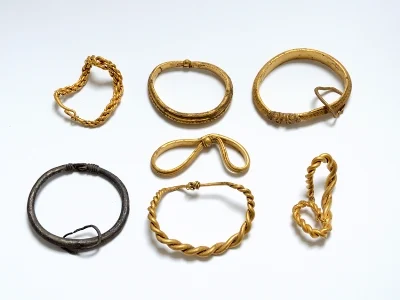
One particularly unusual aspect is that the two rings were placed together in a stone burial structure, which experts say is highly uncommon and possibly even unique. In comparison, similar rings have previously been found in other contexts, such as a bog deposit in Häradshammar in Östergötland.
Researchers believe the rings were likely deposited as offerings. In the Bronze Age, such neck rings were seen as status symbols and were most often associated with women.
In one of the graves, archaeologists also found cremated human remains, partly placed in an urn and partly in small pits in the ground, adding further insight into burial practices from the period.