
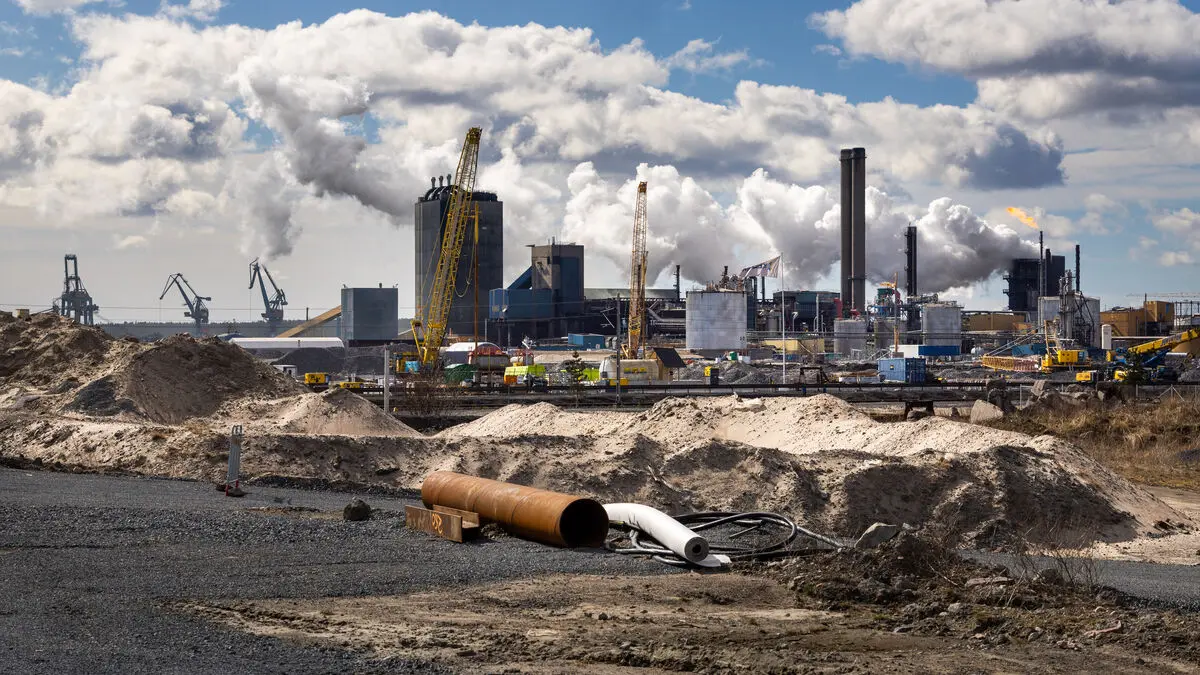
Svartön in Luleå was meant to symbolize Sweden’s green future — a massive industrial transformation where coal-powered steel production would give way to cleaner electric technology. But as billions pour into the ambitious project, a disturbing mystery has begun to overshadow the dream.
At the center of the island, SSAB is building a 1.5-kilometer-long electric steel mill that aims to drastically reduce carbon dioxide emissions by replacing old coke ovens and blast furnaces. Technical manager Carl Orrling says the company chose to abandon outdated technology from the 1960s and 70s in favor of an entirely new climate-smart steel plant.
The transformation of Svartön is part of a much larger green transition in northern Sweden. Nearly 80 billion kronor in investments are planned for the area over the next five years. Alongside SSAB, mining giant LKAB, Stegra, and several energy and battery projects are preparing major developments around the island and nearby Hertsön.
Yet the optimism has recently been shaken by a series of unexplained illnesses among construction workers. Since the start of the year, at least 24 people at the SSAB construction site have reported symptoms including nausea, headaches, and nosebleeds. Five workers required medical treatment, and all construction work was halted on April 3.
Safety representative David Renström says concern spread quickly after he detected a strong almond-like smell — a scent often associated with hydrogen cyanide, a potentially deadly gas. Emergency testing teams responded immediately, but despite thousands of soil analyses and over 160,000 gas tests, investigators still cannot explain what caused the illnesses.
Many now suspect the problem may be buried beneath the surface. Svartön has more than a century of heavy industrial history, and experts say old waste materials may still remain underground. Historical records describe buried slag, industrial debris, barrels with unknown contents, and traces of cyanide left behind from earlier industrial eras.
Industrial historian Roine Viklund explains that companies in the past often disposed of unwanted materials by burying them or dumping them into nearby waters. As excavators dig deeper into the ground for new construction, workers fear that long-hidden contaminants could be resurfacing.
The uncertainty has created tension across the project. Although SSAB plans to eventually resume construction with stricter safety procedures, labor representatives remain skeptical. Renström insists he cannot support restarting work until the cause of the illnesses is clearly identified and workers know how to protect themselves.
Despite the fear and growing frustration, local leaders still see Svartön as the key to Sweden’s industrial future. Port officials and project developers believe the island could become one of Europe’s most important green industry hubs — if the mystery beneath the ground can finally be solved. 🌑🏗️